Why a Dutchman built an engineering company in Belgrade
The decision to move to Serbia was made for me by a small moment, long before I made it myself.
The decision to move to Serbia was made for me by a small moment, long before I made it myself.
5-Minute Read
I had been to Belgrade once, to prepare for an event where I was speaking, and had met a few people briefly. The next time I came, before I had seen anyone on that trip, I was walking down the main shopping street when someone called out: “Hans! Hans!” It was one of the people from that first visit. “Come, sit, have a coffee.”
They were busy pulling off an event of their own and had little time to spare. They made time anyway. I felt completely welcome, and that feeling never left me.
Fifteen years later I still think coffee is one of the most underrated things about working in Serbia. Most of the trust I have built here started in a half hour that was not in anyone’s agenda.
I did not set out to build an engineering company. Before Teem I ran a green-tech company in Greece, and after the crisis there I moved to Belgrade in 2011 and continued the company there.
The idea came from one project. We hired engineers in Serbia to work with Dutch suppliers on technical drawings. Once they knew the project, they started spotting better solutions, suggesting improvements to the drawings themselves and raising the standard of the work. Standards held. Trust grew. It stayed with me.
Around the same time I kept hearing the same sentence from Dutch companies: plenty of ambitious projects, not enough people to deliver them. And I kept meeting engineers in Belgrade who were exactly the people those companies were looking for, and who assumed the only way to build a real international career was to leave.
Young people in Serbia often ask me how to leave. I give them the full picture. I have moved countries twice myself and I do not regret a minute of it. You learn an enormous amount about yourself. But you also miss your family and your friends, the food, and the ease of being understood without explaining yourself. Even when everyone speaks English, sharing good news or a hard day in your own language is different. The grass is rarely as green as it looks from a distance.
So when a talented engineer told me they were thinking of leaving purely for their career, I started asking a different question: is leaving the only path to growth? I came to believe it is not. A better future is not a place. It is how you work and who you work with. An engineer can stay close to the people they love, keep living where they feel at home, and still work on demanding Dutch projects, learn from another working culture and build a career they are proud of. That is the reason Teem exists.
For a Dutch reader there is a practical side to this as well. When Serbian engineers emigrate to the Netherlands they help with the capacity problem, but they also add to a housing market that is already under pressure, and Serbia loses people it needs for its own future. Engineers who work on Dutch projects from Belgrade solve the first problem without creating the other two. One company cannot fix labour shortages, housing or brain drain, but it can design its work so that it does not make them worse.
I am a perfectionist by nature, and in Teem’s first year I poured myself into the parts that felt safe to control: the administration, the legal frameworks, understanding every rule across the Netherlands, the EU and Serbia so that we would never put a foot wrong. All of it mattered and I still care about it. But I gave it far more of me than it needed.
The work only I could do in that period was different. It was the conversations with clients, understanding what they needed and what was blocking their growth. Every hour spent perfecting a process was an hour not spent there. I still believe in building the foundation before you go full speed. What I learned is to be honest about which parts of it need the founder, which parts can wait, and which parts someone else will build better than I would. The founder’s time belongs to the work only the founder can do.
Clients sometimes ask what makes us different. They expect a process, or an explanation of how we handle the legal side across borders. Those things have to be right, and we take them seriously. But the difference is in how people are treated while all of that runs. Whether a labour contract is a form to file, or something that changes a person’s life.
That is why every Teem engineer is a full-time employee with us in Belgrade, works for one client and stays with that client, sits in an office with colleagues rather than alone at a kitchen table, and has someone whose job is to ask how they are doing and not only how the work is going. It is also why we ask every client to come to Belgrade before we start, to drink a coffee and meet the people. You cannot feel a company over a video call.
That belief came first. The model grew out of it, not the other way around.
I still think about that coffee on the main street. Nobody scheduled it. Nobody had a reason to make a stranger feel that welcome. They did it anyway.
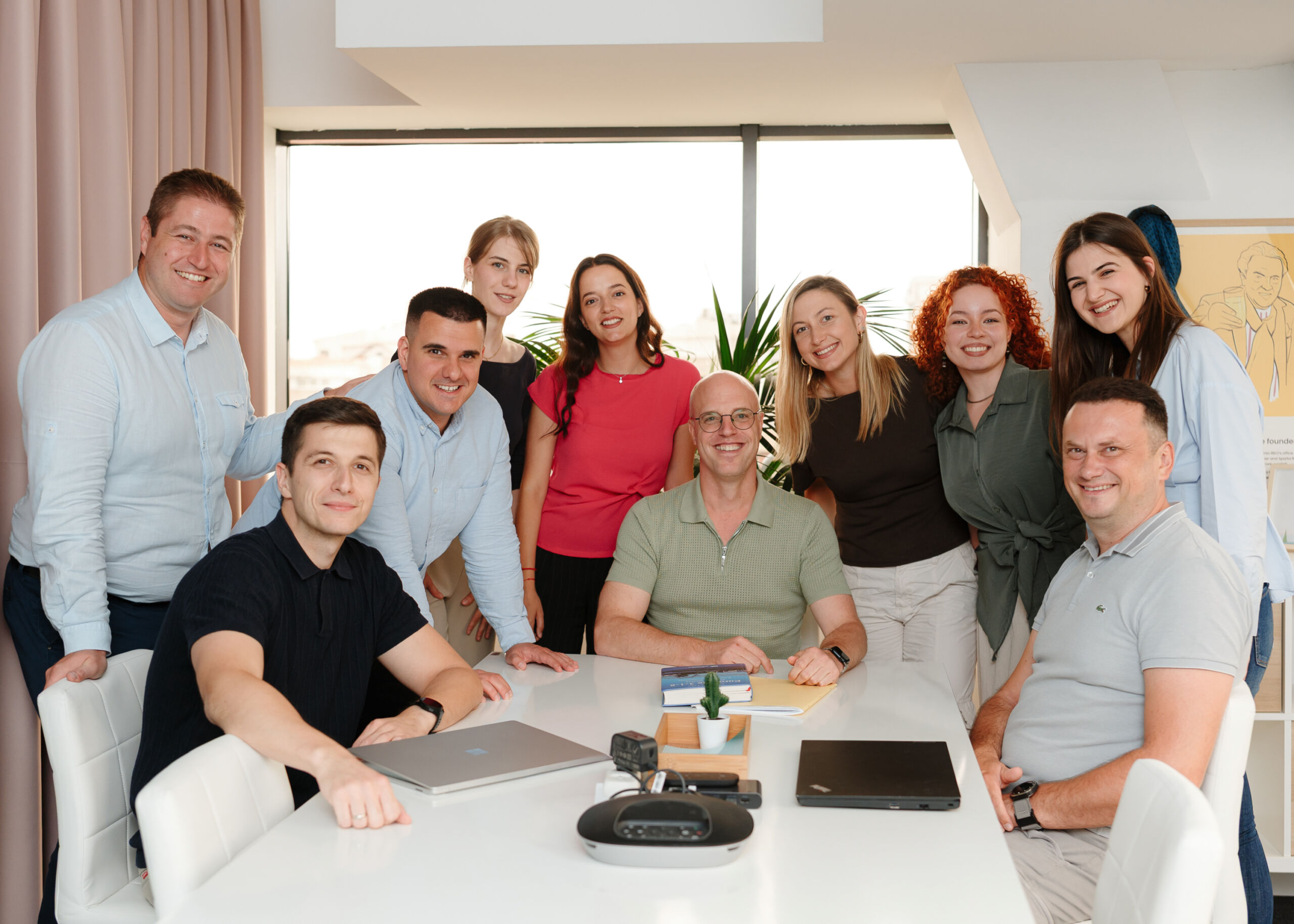
That is what I hope an engineer feels in their first week on a Teem team, and what I hope a Dutch client feels the first time they walk into our office in Belgrade. One director told me it felt like walking into his own office, only in another country.
If enough talented people choose to stay and build here, in a place that already feels like home, that changes more than one company. It is the closest thing I have to a dream for Teem, and I would like to see it in my lifetime.
So that is why a Dutchman built an engineering company in Belgrade. Not because I planned it, but because I kept meeting people worth staying for, on both sides.
If you want to experience what I mean, come and have a coffee with us in Belgrade.
This website uses cookies to improve user experience. To learn more take a look at our Privacy policy.
By selecting "Accept cookies" on this banner, you agree to the use and storage of cookies on your device.